About the founder
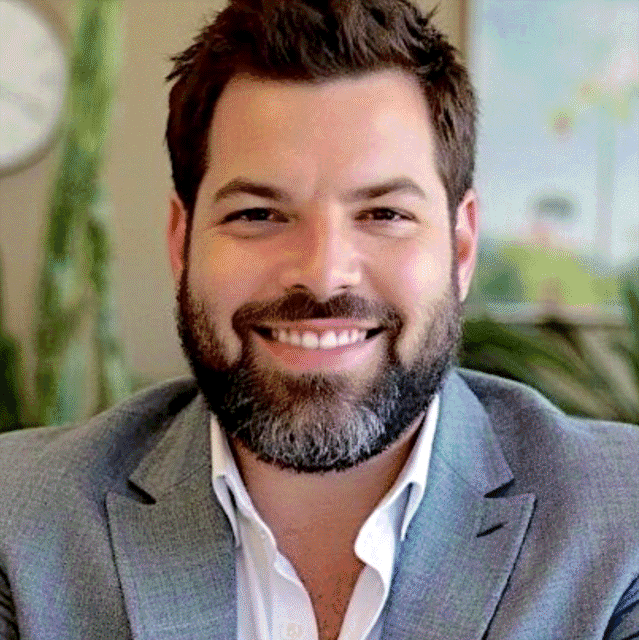
David Levine Bramante
Born in 1982. Raised on games, robots and science fiction. Now building software, AI computers and autonomous agents in Austin. The thread through all of it is curiosity about how things work, and the urge to build something with what I learn.
1982 onward / Los Angeles
The games came first.
At school in Los Angeles, “computer time” meant Oregon Trail. At home, it was the NES, SNES and Sega. Zelda made exploring an unfamiliar world feel like a worthwhile way to spend an afternoon. Every game was also another encounter with technology: a machine that could hold a world, respond to a decision and reward figuring something out. Science fiction fed the same curiosity. Blade Runner is still one of my favorite films. I loved Star Wars and Star Trek together: the worlds, the robots, the machines and the questions about what people might become alongside them. That interest in games and imagined futures is still close to the work. It shows up in Level One’s book-to-game demos and in the films I make through CinemaMachina.
The 1990s / Computers and competition
Fry’s Electronics.
LAN cables. Age of Empires.
Trips to Fry’s Electronics in Burbank became part of learning to build computers and get them talking to one another. Hardware and networking had an immediate purpose: better machines, connected games and more possibilities. That carried into Quake III Arena and Age of Empires, gaming in Koreatown and at LAN centers. Getting everyone connected was part of the experience. So was learning the hardware, trying things, breaking things and working out how to make them run. My brother and I went on to represent the United States in Age of Empires at the inaugural World Cyber Games, the event described as an electronic Olympics. A childhood fascination with games had taken us onto an international stage.
The operator years
Real estate by day.
Technology after hours.
I built a long career in Los Angeles real estate while continuing to work on technology. Running a business puts software in perspective: the records have to be right, people need to know what happens next, and a useful tool has to fit the way work actually gets done. Alongside that career, I worked on startups, developed projects of my own and consulted across technology, marketing and go-to-market. That included marketing and growth work with LoopChat through UC Berkeley’s SkyDeck program, working between Berkeley and Los Angeles. Those years gave me a practical interest in the whole product: what it does, who needs it, how someone discovers it and what the business must do to keep it useful.
2020–2022 / The David Bramante Show
Conversations about
humans and machines.
During the pandemic, I hosted The David Bramante Show, exploring consciousness, biohacking, artificial intelligence, robotics and the relationship between humans and machines. The show gave that lifelong fascination a place to go: read deeply, talk with researchers and ask questions about the future. The published series runs from 2020 into 2022, before today’s wave of AI tools had become part of everyday conversation. Those questions continue through my software work and AI filmmaking. I am interested in what the tools can make possible, and in the human choices around how we use them.
Early 2025 / CodexDeus
Give the building
a home.
I started CodexDeus in early 2025, bringing my own projects, client development and applied AI work into one studio. The work connects the parts I enjoy: understanding a business, choosing the product, writing the software and getting it into use. It is a coined name combining codex, a book or collection of writings, and deus, God. I use it to mean “Code of God” or “Book of God.” For me, the name connects an imagined world with the work of making something real. Today, Services brings together custom software, AI computer builds, voice agents and paid game demos. The studio also develops ventures of its own.
2026 / Austin
Client systems.
Competition deadlines.
In 2026, I moved to Austin and worked on enterprise-level custom software across the full stack: public interfaces, private portals, accounts, permissions, databases, integrations and the operating systems behind a business. I also develop Topjib and JimBondy as CodexDeus ventures. Austin also brought hackathons: concentrated stretches of choosing an idea, building under pressure and making the result clear enough for someone else to try. Three wins came from projects I built: Factory Guardian, TickyTalky and PunchLyne. A fourth winning project began with an idea I contributed and was built by others. Read the hackathon build stories or explore the studio’s ventures.
Now / Hardware, machine learning and autonomous agents
The computer.
The model. The work it can do.
My current focus is hardware, machine learning and autonomous agent development: how the machine, the models and the connected tools can work together around a useful task. That includes custom MacBook AI computers, Sarah AI’s voice workflows, Heaven Robotics’ BFF and AOK projects, full-stack client systems and experiments with agents that can work through a task with clear access, review and stopping points. The curiosity that started with school computers, game consoles and trips to Fry’s is still here. Today I run CodexDeus as an independent technology research and venture studio in Austin. Read about the experiments.