Vendor connection
Authorized REST, GraphQL, webhook, SFTP, structured-file, or other supported interfaces using the vendor documentation and credentials supplied for the engagement.
Connected Operations
The difficult part of a pharmacy or fulfillment integration is rarely sending one request. The real work is deciding when the request is allowed, which data moves, who can see it, how external statuses map back into the product, what happens when something fails, and how staff correct an exception without creating duplicate work.
A useful integration connects the customer or clinic experience to the operator backend and the approved external vendors. Payment state, order state, pharmacy state, fulfillment state, and shipping state should be visible as one understandable timeline rather than five disconnected dashboards.
CodexDeus scopes the entire operating path as one focused software product: the interface, backend logic, database, vendor connections, staff tools, notifications, testing, and production deployment.
Price: $20,000 fixed. Delivery: within two months.
Capabilities
Authorized REST, GraphQL, webhook, SFTP, structured-file, or other supported interfaces using the vendor documentation and credentials supplied for the engagement.
Approved payment or subscription flows, authorization states, receipts, refunds or adjustments, webhook handling, reconciliation visibility, and clear separation between payment and fulfillment status.
Validated records, mapping between internal and external identifiers, controlled submission, duplicate protection, routing rules, and a visible handoff to the selected pharmacy or fulfillment partner.
Webhooks or scheduled checks that bring supported external events back into the product, translate vendor-specific states, update the account, and trigger the correct staff or customer notification.
Carrier or fulfillment events, tracking links, delivery visibility, delayed or failed shipment states, and operator tools for the exceptions the automated path cannot resolve.
Admin queues, event history, logs, retries, notes, exports, alerts, permissions, and manual resolution paths so the business can understand what happened and act on it.
Workflow
External systems will time out, reject records, change statuses, or require staff review. The product should treat those outcomes as real workflow states rather than invisible technical errors.
Relevant Work
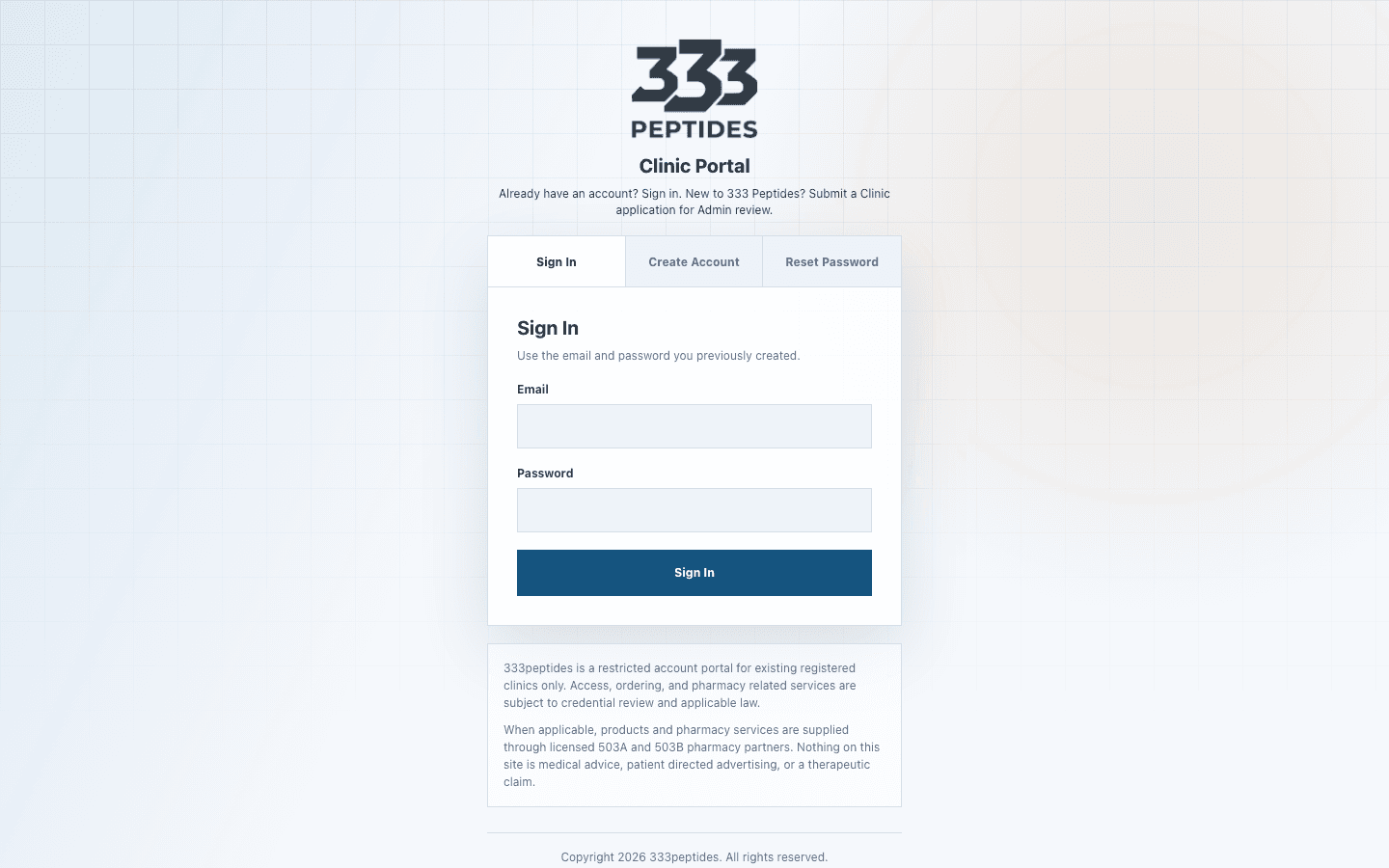
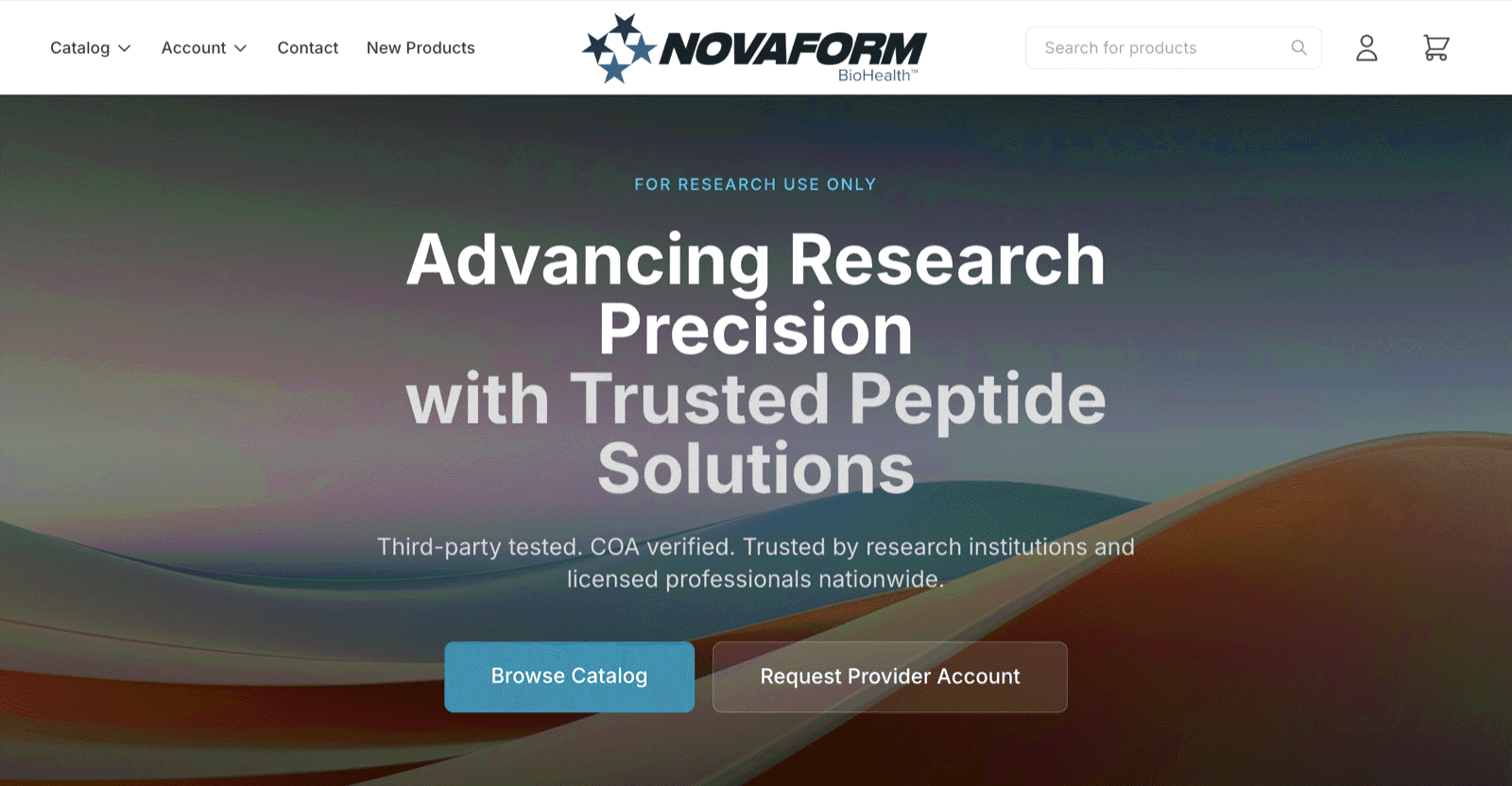
Screenshot examples shown here are 333 Peptides and NovaForm BioHealth. Stacked Peptides and Malibu Peptide Institute are described below.
More Project Experience
A peptide therapy and health-technology project spanning patient intake, education, and clinician-connected workflows.
An online peptide education platform with course, reference, and learner-account experiences.
Project Inputs
CodexDeus can build the connection, but cannot manufacture access to a pharmacy, processor, carrier, or fulfillment vendor. These inputs determine whether an integration can fit the fixed two-month scope.
Peptide Software Pages
The complete category: public site, portal, backend, payments, integrations, automation, and launch.
Accounts, onboarding, documents, roles, approvals, order status, notifications, and staff operations.
Vendor APIs, payment states, order routing, fulfillment, shipping, tracking, and exception workflows.
FAQ
A supported structured-file, secure portal, export, or documented manual handoff may still be possible, depending on the vendor and the client’s requirements. CodexDeus will not scrape or bypass a vendor’s access controls to simulate an unavailable integration.
No. Approval, underwriting, account status, API access, and permitted use are controlled by those providers. The client must secure the commercial relationship; CodexDeus builds against the access they authorize.
Yes, when the selected vendors expose usable fulfillment, shipment, or tracking events. The product can store those events, translate them into clear statuses, notify the appropriate people, and surface exceptions for staff review.
CodexDeus builds one focused online software product for $20,000 fixed, delivered within two months. The written scope defines the customer experience, operator tools, integrations, and launch requirements included in that engagement.
David Bramante does the product scoping, architecture, frontend, backend, integrations, deployment, and launch work through CodexDeus. The build is not handed to a junior team or an anonymous outsourcing layer.
CodexDeus builds software but does not certify a product or guarantee that an organization is HIPAA compliant. If a product will handle protected health information, the client and its qualified advisors define the requirements, approved vendors, contracts, and operating policies. CodexDeus implements the agreed software controls, such as role-based access, secure data handling, audit-aware workflows, and approved integrations.
No. CodexDeus builds software. The client remains responsible for clinical decisions, product eligibility, pharmacy and fulfillment relationships, legal and regulatory review, privacy requirements, approved claims, and the policies that govern the business.
Contact
Send the current website or prototype, user types, required workflow, vendor documentation, decision-maker, and desired launch date. Confirm that $20,000 is budgeted.